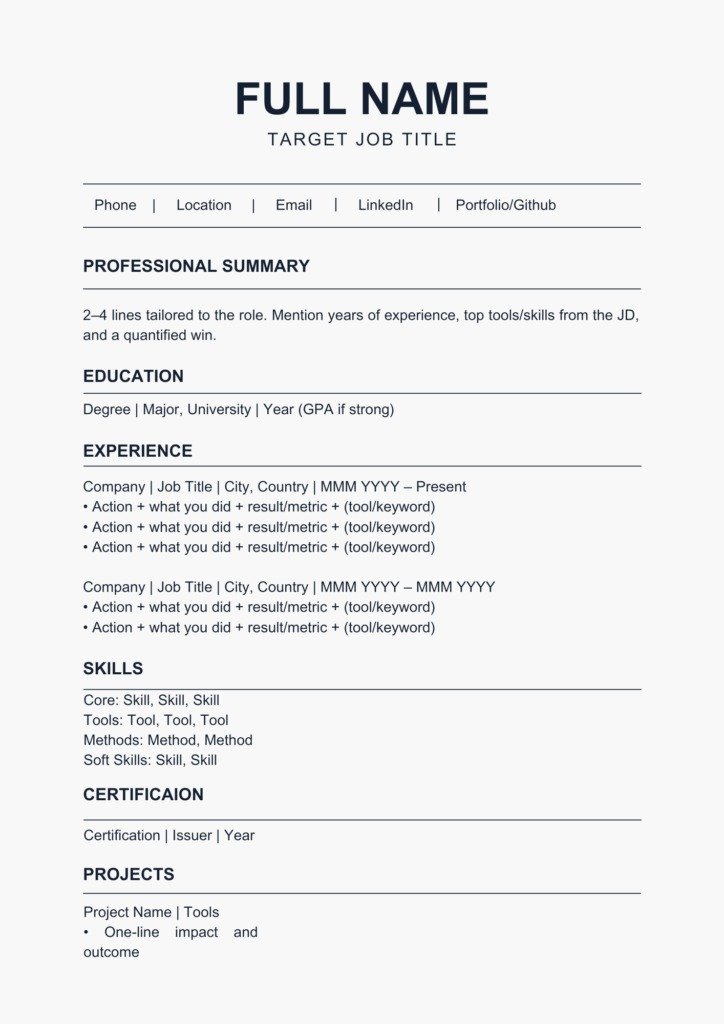
Many people use the terms “resume” and “CV” interchangeably, but they are not the same. In 2026, understanding the difference between a resume and a CV is important because using the wrong document can reduce your chances of getting hired.
In this guide, you’ll learn the key differences and when to use each one.
🌍 What is a Resume?
A resume is a short and concise document that highlights your:
- Skills
- Work experience
- Education
- Achievements
Key features:
- Usually 1 page (sometimes 2)
- Focused on relevant experience
- Tailored for a specific job
👉 A resume is used for most job applications.
📑 What is a CV?
A CV (Curriculum Vitae) is a more detailed document that includes your complete academic and professional history.
It includes:
- Education in detail
- Research experience
- Certifications
- Publications
- Awards
Key features:
- Longer than a resume (2+ pages)
- More detailed
- Not always tailored for one job
👉 A CV is commonly used for academic, research, or medical roles.
⚖️ Main Differences Between Resume and CV
📏 Length
- Resume → Short (1–2 pages)
- CV → Long (2+ pages)
🎯 Purpose
- Resume → Job applications
- CV → Academic and research positions
🧾 Content
- Resume → Skills and experience (focused)
- CV → Full career history (detailed)
🔄 Customization
- Resume → Customized for each job
- CV → Usually ثابت (with updates over time)
🌐 When Should You Use Each?
👉 Use a resume when:
- Applying for jobs in companies
- Looking for freelance or remote work
- Applying through job platforms
👉 Use a CV when:
- Applying for universities
- Academic or research positions
- Scholarships or fellowships
🧠 Why This Difference Matters
Using the wrong document can:
- Confuse employers
- Make your application look unprofessional
- Reduce your chances of getting selected
👉 Always check what the employer asks for.
💡 Tips for Choosing the Right Document
- Read the job description carefully
- Follow the employer’s instructions
- When in doubt → use a resume for most jobs
⚠️ Common Mistakes
- Sending a CV for a normal job
- Using a resume for academic roles
- Making your resume too long
- Including unnecessary details
🔑 Pro Tip
👉 If the job doesn’t specify, a well-structured resume is usually the safest choice.
✅ Final Thoughts
Understanding the difference between a resume and a CV in 2026 can give you a strong advantage in your job search. Each document serves a different purpose, and using the right one shows professionalism and attention to detail.
Choose wisely, tailor your application, and increase your chances of success.